Nowadays, more and more HOAs are turning to artificial intelligence (AI) to streamline daily operations and reduce stress on board members. What was once considered futuristic technology is now a practical, everyday tool that associations can rely on to save money and improve efficiency.
In this article, we will explore what Predictive AI Maintenance is and the incredible benefits it brings to communities that want to stay one step ahead.
When talking about HOA maintenance specifically, the process can feel like an endless cycle of repetitive tasks. It covers the care and upkeep of common areas, including landscaping and amenities, as well as systems such as elevators and HVAC units. As well as roofs, exterior walls and parking lots, depending on your community’s bylaws.

While necessary, maintaining common areas often requires a lot of time, planning, and paperwork. For board members, that means juggling service requests, scheduling vendors, inspecting equipment, and documenting every step. There are a lot of responsibilities, and when things go wrong, it can quickly overwhelm volunteers who already have full-time jobs.
That is where AI steps in. By automating routine processes and predicting potential failures before they happen, AI gives boards back valuable time while helping protect the community’s assets.
Table of Contents
What Is Predictive Maintenance?
HOA maintenance includes all the tasks needed to keep your community safe, functional, and attractive. Beyond improving residents’ quality of life, good maintenance directly supports property values, since a well-kept community is worth more to potential buyers.
There are several types of maintenance strategies, but one of the most forward-thinking is predictive maintenance (sometimes called preventative maintenance). Unlike traditional methods that focus on fixing problems after they happen, predictive maintenance is about anticipating issues and addressing them before they become emergencies.
How Predictive Maintenance works
Predictive maintenance relies on regular monitoring, performance tracking, and data analysis to forecast when systems or assets are likely to fail. This allows boards to:
- Plan repairs in advance instead of rushing to fix breakdowns.
- Extend the useful life of equipment like HVAC systems, pool pumps, and elevators.
- Reduce the chances of major failures that disrupt community life.
- Save money in the long run by catching small problems before they escalate.
In other words, predictive maintenance shifts your board from an “If it ain’t broken, don’t fix it” mindset to a “Fix it before it breaks” approach.
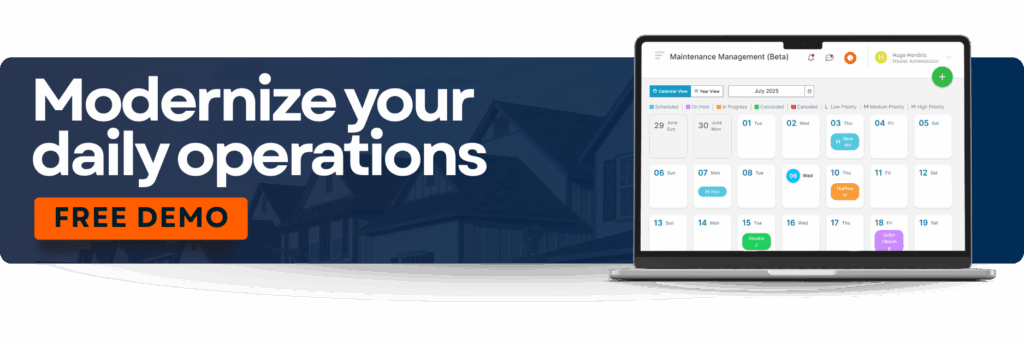
👉 Want to simplify maintenance in your community? Try Neigbrs’ Maintenance Management tool. This feature was designed to centralize maintenance information and keep everyone informed. It comes with:
- A maintenance form for residents to fill out and easily submit service requests.
- A multicolored scheme to track the current state of the maintenance.
- A space for attaching documents, images and links.
In short, predictive maintenance is about creating a reliable, proactive system that builds trust between residents and board members, all the while preserving property values and avoiding unnecessary headaches.
How Is AI Being Used in Predictive Maintenance?
Even though AI is becoming more mainstream, adoption among U.S. workers remains surprisingly low. Surveys show that nearly two-thirds of American employees still use little to no AI in their daily work. For HOAs, this presents a unique opportunity to get ahead of the curve and reap the benefits of a technology that many are still underutilizing.
Taking the “busywork” off your plate
The administrative tasks in HOA maintenance, as important as they are, consume valuable time and energy. Board members have to log service requests, schedule repairs, and regularly check in with vendors.
AI can ease this burden by automating these processes, reducing the risk of human error and ensuring information flows seamlessly without the constant need for human oversight.
For example, the right AI tool can:
- Automatically assign service requests to the right vendors.
- Flag urgent issues for immediate attention.
- Monitor equipment health in real time to keep maintenance on schedule.
This reduces labor costs and gives board members and managers more time to focus on big-picture improvements and other community matters.
From reactive to proactive management
Strong HOA management is not just about reacting quickly when problems arise; it’s about making an effort to prevent them altogether.
AI helps boards shift from a reactive model to a proactive one by analyzing real-time performance data. This proactive stance protects the community’s assets and helps to allocate resources more effectively, as well as improve resident experience.
How Predictive AI Maintenance works
AI-enabled predictive maintenance uses machine learning algorithms and data analytics to study equipment performance patterns. It looks for small changes or inefficiencies that humans might miss, like a subtle increase in energy use or vibration. These early warnings predict when a system is likely to fail or need servicing.
The benefits of this foresight are:
- More time to schedule timely interventions.
- Lower emergency repair costs.
- Longer asset lifespans.
- More efficient operations.
- Greater peace of mind for residents and boards.
Smarter communication with residents
AI isn’t limited to equipment. It also improves communication within the association.
- Answer common resident questions instantly.
- Route maintenance requests to the right person.
- Provide real-time updates about service progress.
This responsiveness makes homeowners feel heard and valued, boosting overall satisfaction.
Financial insights
AI can also analyze your community’s financial patterns, helping boards budget more accurately. It can flag areas of overspending, generate detailed reports, and even suggest adjustments based on predictive maintenance needs.
This equips board members with everything they need to make better and more informed decisions when dealing with finances, those reserved for maintenance, or other community matters.
The cost comparison
The transition from reactive maintenance to predictive maintenance may be the most transformative shift an AI integration can bring. Traditional reactive approaches can cost up to 9–10 times more than preventive maintenance. By identifying problems early, AI ensures communities save money and avoid disruptive emergencies.
Example: A pool pump that overheats and fails in midsummer could cost thousands to replace on short notice. With AI monitoring, performance changes are detected early, allowing for a simple repair before they escalate.
Challenges of Implementing Predictive AI Maintenance
As powerful as AI can be, adopting it does come with hurdles:
- Upfront costs: Integrating AI systems and IoT (Internet of Things) devices requires an expensive initial investment.
- Knowledge gaps: Many boards lack familiarity with AI, which can slow adoption.
- Data quality: AI depends on clean, consistent data. Fragmented records or outdated systems make integration harder.
- Privacy concerns: HOAs must ensure resident and community data is secure.
Still, many of these issues can be solved with phased adoption and the right support from technology partners.
Starting with simple tools for HOA management, such as Neigbrs, can also ease the transition.
While AI handles the heavy lifting, you can use Neigbrs to keep residents updated with service requests, maintenance alerts, and real-time notifications about ongoing work.
Ready to experience the full suite of Neigbrs’ capabilities? Book a free demo today and learn how our platform can transform your community management process.

Important Disclaimer
It’s essential to reiterate that AI is a powerful tool, but it is not a replacement for professional judgment. It can not completely prevent unexpected breakdowns or provide legal advice. HOAs should avoid using AI to interpret laws, draft governing documents, or make legal predictions. For legal matters, always consult an attorney familiar with your state’s requirements.
Final Thoughts
Artificial intelligence is reshaping HOA operations. For boards and managers, Predictive AI Maintenance represents a shift from reacting to problems to anticipating and preventing them. In turn, the results manifest in lower repair costs, longer-lasting equipment, a more efficient board, and happier residents.
Predictive AI Maintenance is still in its early stages, but its potential is undeniable. As consumer demand for smarter community solutions grows, boards that embrace AI early on will have a cost-saving advantage.